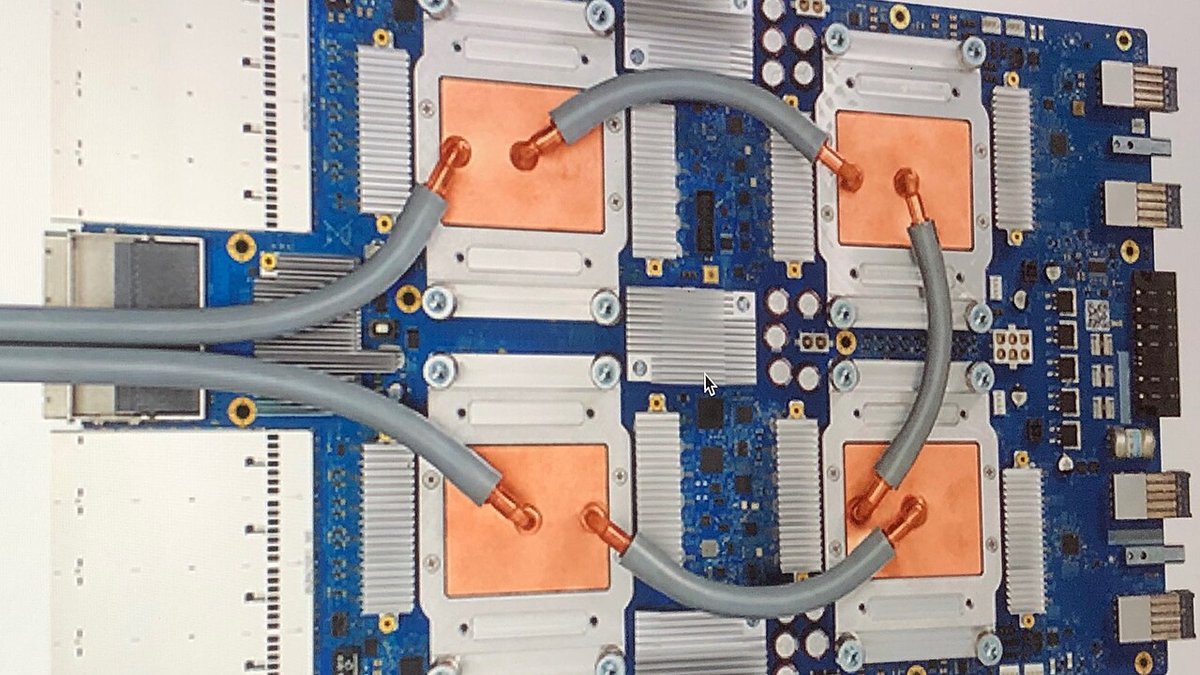
Google’s launch of TorchTPU and Amazon’s TorchNeuron signal a coordinated push to dilute Nvidia’s grip on the AI ecosystem. By enabling PyTorch developers to run models on their own TPUs and Trainium chips, both giants are offering a viable alternative to Nvidia’s GPUs, potentially reshaping the hardware landscape for AI applications.
Breaking the GPU Monopoly
PyTorch, the most widely adopted open‑source toolkit for building and training AI models, has historically been engineered to leverage Nvidia GPUs. With 85% of AI apps built on PyTorch, the platform’s default hardware dependency has cemented Nvidia’s position as the de facto AI accelerator. Google’s TorchTPU and Amazon’s TorchNeuron now allow developers to shift workloads to proprietary chips with minimal code changes, thereby challenging Nvidia’s dominance.
- Google’s TorchTPU supports seamless migration of PyTorch models to TPUs via a simple configuration tweak.
- Amazon’s TorchNeuron integrates with Trainium, its custom AI chip, and contributes open‑source patches that decouple PyTorch from Nvidia hardware.
- Both companies have introduced tooling—TPU Agent Suite and LiteRT updates—to streamline debugging and performance tuning on their respective platforms.
- Collaborations with Meta, Hugging Face, Inferact, and RadixArk ensure TorchTPU’s compatibility with leading AI frameworks and libraries.
- These moves are part of a broader strategy to diversify the AI supply chain and reduce reliance on a single vendor.
Data Breakdown
| Metric | Details |
|---|---|
| PyTorch Adoption | 85% of AI apps use PyTorch |
| Google Tool | TorchTPU – runs on TPUs, integrates with Google Cloud |
| Amazon Tool | TorchNeuron – runs on Trainium, integrates with AWS |
| Hardware Shift | Zero‑rewrite migration from Nvidia GPUs to TPUs/Trainium |
| Industry Impact | Potential erosion of Nvidia’s GPU market share in AI workloads |
Deep Dive: Questions About AI Shifts
Can I get rid of the AI on Amazon?
While the phrasing may suggest removing AI capabilities entirely, the reality is that Amazon’s new TorchNeuron framework is designed to replace Nvidia GPUs with its own Trainium chips for AI workloads. Developers can migrate existing PyTorch models to AWS without rewriting code, effectively eliminating the need for Nvidia hardware within Amazon’s ecosystem. However, this does not mean AI is being removed; rather, it is being re‑engineered to run on Amazon’s proprietary infrastructure.
Why is Amazon using AI now?
Amazon’s foray into AI hardware and software is driven by a strategic imperative to control the end‑to‑end AI stack. By offering TorchNeuron and contributing to PyTorch’s core codebase, Amazon positions itself as a full‑stack AI provider, reducing dependence on external vendors like Nvidia. This move also aligns with Amazon’s broader cloud strategy, enabling it to capture higher margins on AI services and attract developers seeking a more integrated solution.
What AI companies does Amazon own?
Amazon’s AI portfolio includes several key acquisitions and internal developments. It owns Amazon SageMaker, a managed machine‑learning platform, and has invested heavily in Amazon Bedrock, a foundation‑model service. Additionally, Amazon has acquired companies such as Annapurna Labs, which designs the Trainium chip, and has integrated AI capabilities into services like Alexa, AWS Lambda, and Amazon Rekognition. These assets collectively strengthen Amazon’s position in the AI hardware and software market.
Which AI companies does Google invest in?
Google’s investment strategy spans both internal research and external partnerships. It has invested in AI startups such as DeepMind, which focuses on reinforcement learning, and has collaborated with companies like Hugging Face, which develops transformer models. Google also backs open‑source initiatives like the Linux Foundation’s PyTorch project and has funded research in areas such as natural language processing and computer vision. These investments reinforce Google’s commitment to advancing AI while ensuring a diverse ecosystem of tools and models.