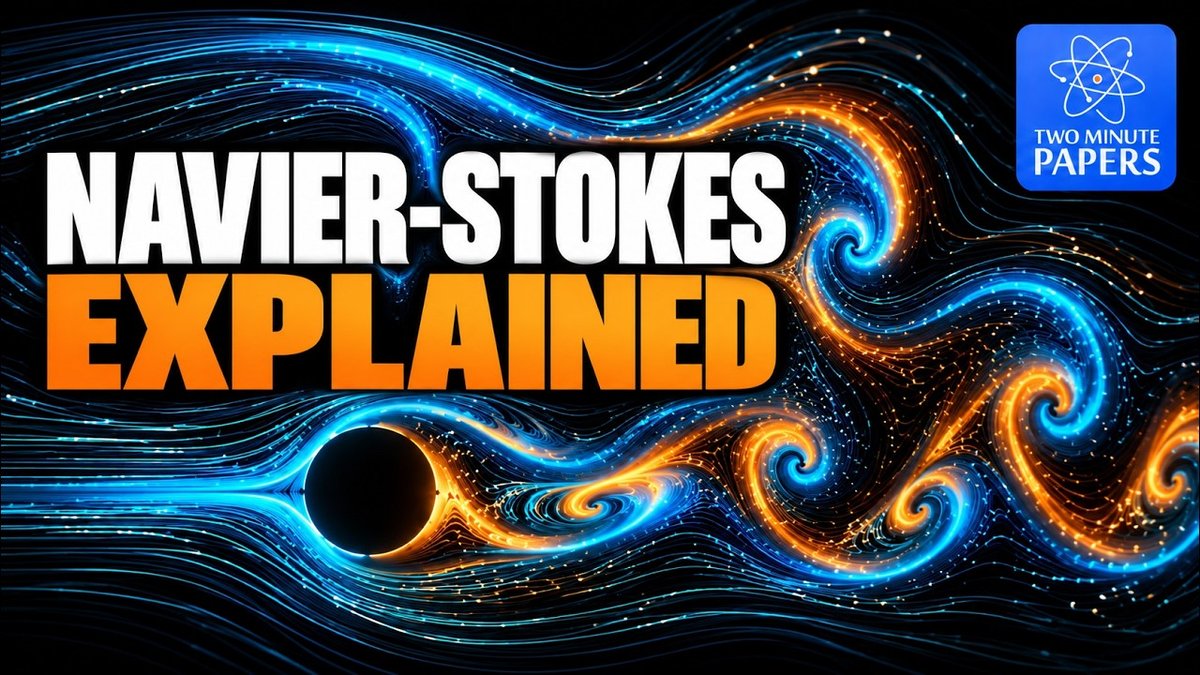
OpenAI has announced a breakthrough in solving the Navier‑Stokes equations, leveraging Lambda’s GPU cloud platform. The claim marks a pivotal moment for AI‑driven fluid dynamics, blending advanced simulation techniques with large‑scale GPU compute.
Core Milestone: OpenAI’s Navier‑Stokes Claim
- OpenAI’s research team published a paper detailing a computational approach that reportedly solves the Navier‑Stokes equations.
- The solution was achieved using Lambda’s GPU‑cloud infrastructure, enabling massive parallel processing.
- Key collaborators include fluid dynamics experts from TU Wien, whose prior work on real‑time fluid control underpins the new method.
- The paper is publicly available on OpenAI’s website and references foundational studies in Nature Communications.
From Fluid Simulations to AI Breakthrough
The journey began with traditional fluid simulation research, culminating in real‑time control systems and academic publications. By integrating these insights with deep learning frameworks, the team crafted a neural‑network‑guided solver that can approximate turbulent flows with unprecedented speed. The collaboration with Lambda provided the necessary GPU horsepower, illustrating how cloud‑based AI platforms can accelerate scientific discovery.
What This Means for AI and Beyond
If validated, this achievement could unlock new possibilities in weather forecasting, aerospace design, and virtual reality. It also signals a broader trend of AI tackling long‑standing physics problems, potentially reshaping how engineers and scientists approach complex simulations. The next steps involve rigorous peer review, open‑source release of the code, and exploration of commercial applications in industries that rely on accurate fluid modeling.