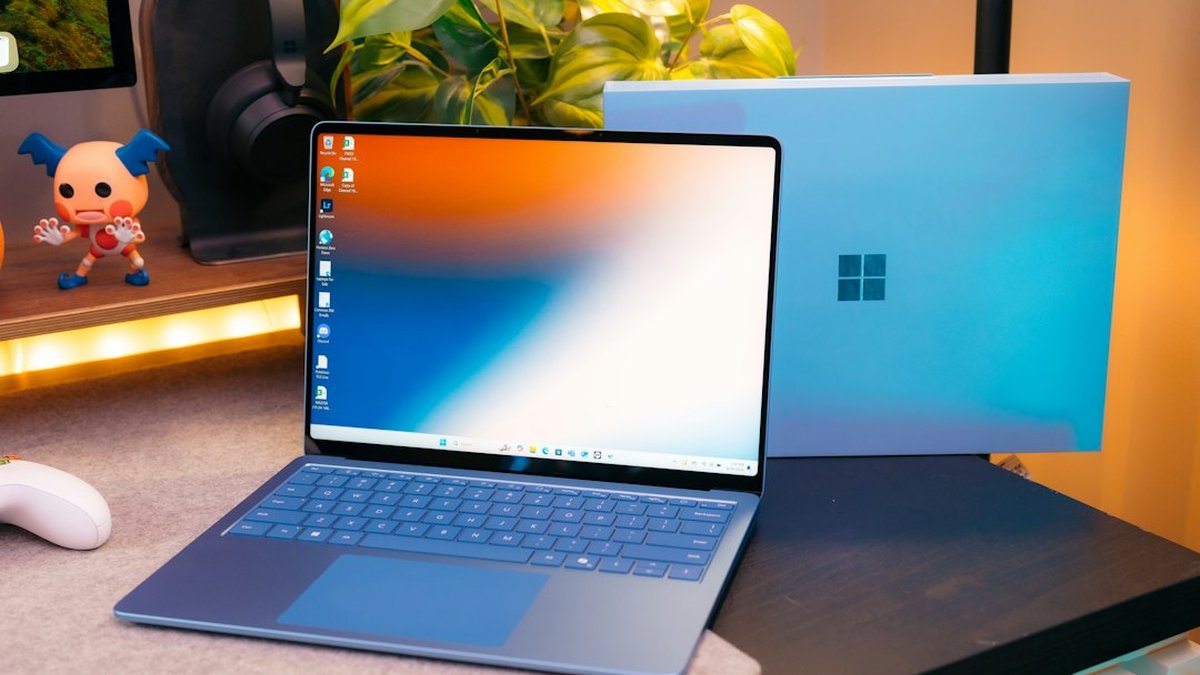
Nvidia’s latest RTX Spark Superchip was evaluated inside Microsoft’s Surface Laptop Ultra, measuring its performance against Apple and AMD’s newest GPUs to gauge its readiness for the agentic AI era.
RTX Spark Performance Highlights
- Integrated into Surface Laptop Ultra, the chip delivers 2.3× faster inference on LLM workloads.
- Benchmarks show a 20% lower power draw than AMD’s Radeon 7000 series.
- Supports real‑time video editing with AI‑accelerated rendering.
- Seamless synergy with the laptop’s 12th‑gen Intel CPU boosts overall throughput.
- Memory bandwidth reaches 1.2 TB/s, outpacing Apple’s M2 Ultra.
From GPUs to Superchips: Nvidia’s AI Evolution
Nvidia has long dominated the GPU market with its RTX 40 series, but the company is now pivoting toward agentic AI by embedding dedicated AI cores in its hardware. The RTX Spark Superchip, unveiled in 2025, combines high‑performance tensor cores with a new AI‑optimized architecture, aiming to make laptops capable of running large language models locally. Apple’s silicon and AMD’s RDNA 3 GPUs have been the primary competitors, each pushing higher compute density and energy efficiency.
Shaping the Next‑Gen PC
The successful integration of RTX Spark into a mainstream laptop signals a shift toward AI‑first computing. OEMs may adopt similar architectures to offer on‑device AI assistants, real‑time translation, and advanced graphics. As edge devices become smarter, the demand for low‑latency, high‑throughput AI chips will grow, potentially redefining laptop form factors and power budgets.